
How I Protect My Sleep in Midlife (And What Happened When I Didn't)
Two nights in a row, my Oura Ring handed me a 65. Then a 64. I have worked on my sleep for years, and there it was in little gray numbers: garbage.
Here's what happened. We'd just gotten back from New York for my birthday. 61, which is a number I don't take for granted. Central Park, the US Open, too much French onion soup, 20,000 steps. And somewhere in the middle of all of it, Jeff started coming down with a cold.
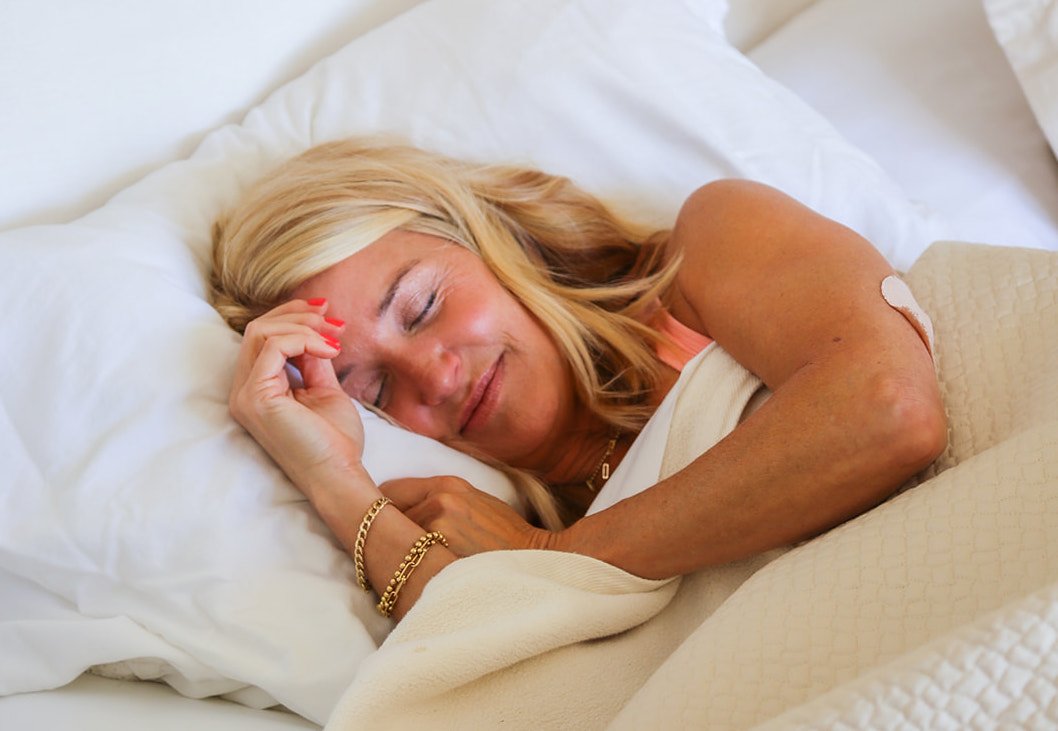
So night one, I'm in a hotel room next to a man coughing and sneezing every four minutes. Night two, I'm home in a different room with the dogs, who were absolutely thrilled and not remotely interested in sleeping.
Night three I made an executive decision. Jeff and the dogs in another room. Me, alone, in the other room.
Sleep score: 89.
Why sleep in midlife is worth protecting
When we're not sleeping well, we're more prone to get sick, more prone to gain weight, more prone to feel puffy and flat and off. I believe sleep is probably the number one thing for our health. Strength and muscle matter enormously for longevity, but sleep is right up there.
And in midlife it gets harder right when it starts to matter more. Hormones shift, temperature regulation goes sideways, and the sleep you used to get for free now takes some setting up.
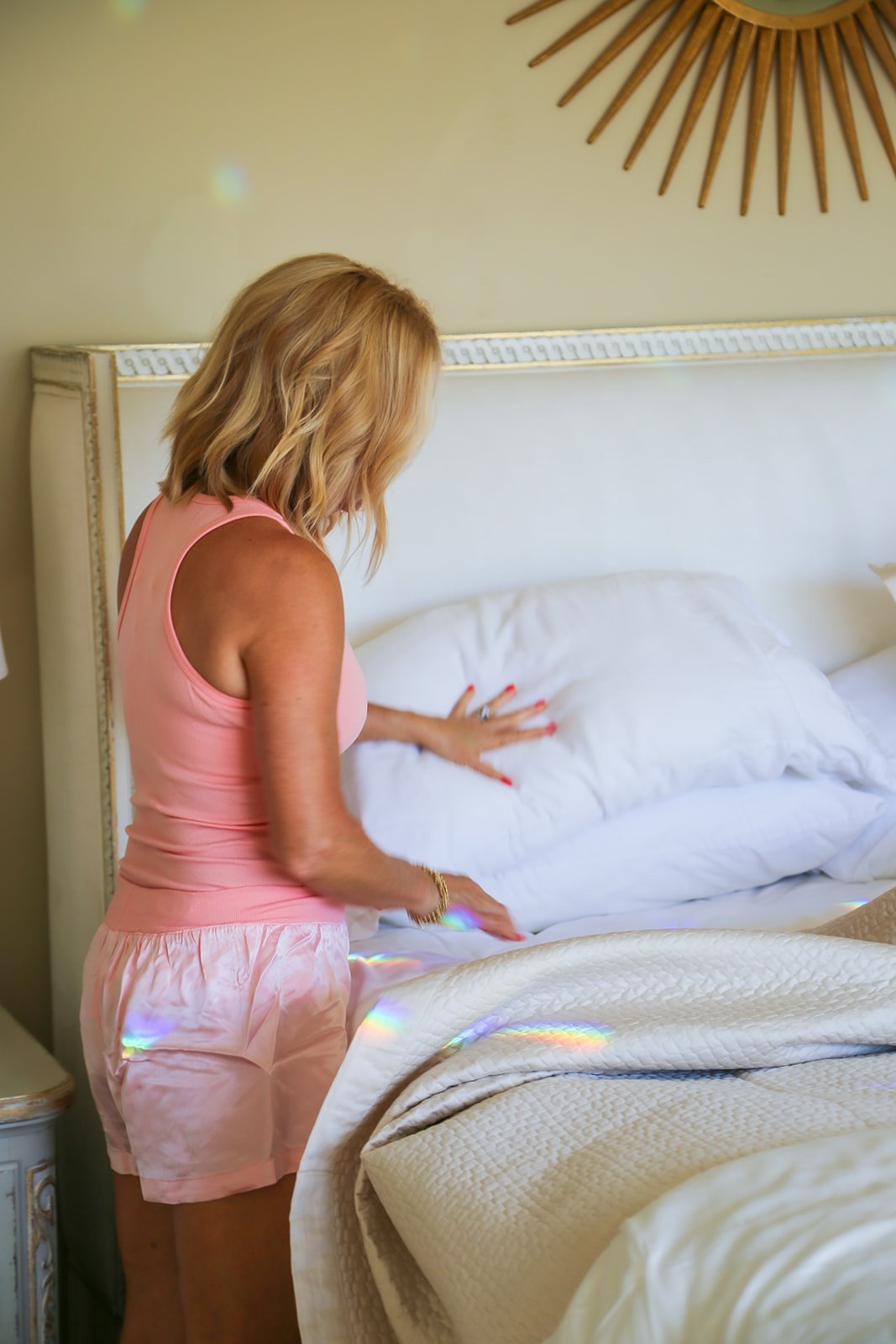
Your sleep doesn't start at bedtime
This is the part I wish somebody had told me twenty years ago. By the time you're lying in bed willing yourself to fall asleep, most of the decisions have already been made. They were made at 3pm when you had that coffee. At 6pm with the glass of wine. At 9pm when you brought your phone upstairs.
I stopped treating sleep like something that happens to me at night and started treating it like something I set up during the day. Jeff would tell you I've gone overboard with it. Probably. But I feel too good to stop.
6 midlife sleep habits worth considering
1. Give caffeine a cutoff
Mine is noon. You will basically never catch me with coffee after 12, and I'm careful about anything else that gives me a lift. If I'm taking Energized, it's before 2. Your cutoff might be 2pm, or 10am. Everybody metabolizes this stuff differently.
2. Make the room cold and dark
I keep ours at 68 degrees, which Jeff has responded to by sleeping under a heated blanket in July. Marriage is compromise. I also started using a sleep mask, and it made more of a difference than I expected for something that costs almost nothing.
3. Look at what you're sleeping on
I'm a side sleeper, and I switched to the Sleep & Glow pillow, which is built for side sleeping and keeps your face off the fabric. Fewer of those sleep creases that stopped bouncing back somewhere around 50. I did not have it with me in New York, and I missed it more than I missed my own bed.
4. Put the phone somewhere else entirely
Not face down. Not across the room. Mine charges in the bathroom. When I was coaching, clients would come to me frustrated that they couldn't lose weight, and we'd dig in and find out they were scrolling at 2am four nights a week. The phone was almost always in it somewhere.
5. Look at what's on your nightstand
Mine is magnesium, progesterone, Bio Active Peptides Restore, and a supplement called Calm. My sleep was decent before, but my deep sleep wasn't great until I added those last two. Now I rarely wake up in the middle of the night and can't get back down. Anything hormone- or supplement-related is worth running by your own doctor first, because what works for me may not work for you.
6. Have a plan for when you're awake anyway
The other night in that hotel room, I stopped fighting it. I lay still and prayed. I thanked God for my health, for a bed to sleep in, and for the fact that I got to be 61. I fell asleep. That one's free.
Questions I get about midlife sleep
How many hours of sleep do women over 50 actually need?
Most adults land somewhere in the seven- to nine-hour range, and that doesn't change much with age. What changes is how hard it is to get there. If you're in bed eight hours and still dragging, the quality is usually the issue, not the quantity.
Why do I keep waking up at 3 am?
There are a lot of possible reasons, from hormone shifts to alcohol to a warm room, and it's worth talking through with your doctor if it's constant. What I can tell you is that the two things that changed my middle-of-the-night waking were the temperature and what I take before bed.
Does a sleep tracker actually help?
For me, yes, but not because the number is magic. It showed me a pattern I would have talked myself out of otherwise. Two bad nights, two bad scores, one change, and the score came back. Some women find a tracker makes them anxious instead. You'll know pretty fast which one you are.
Start with one thing
If you're struggling right now, you don't need to overhaul everything. Pick one. Move the phone, or set the caffeine cutoff, and see what your body does with it.
Sleep is the thing I protect harder than almost anything else I do for my health. Not because I'm disciplined, but because I've felt the difference. And once you feel it, you get a little rigid about it too.
